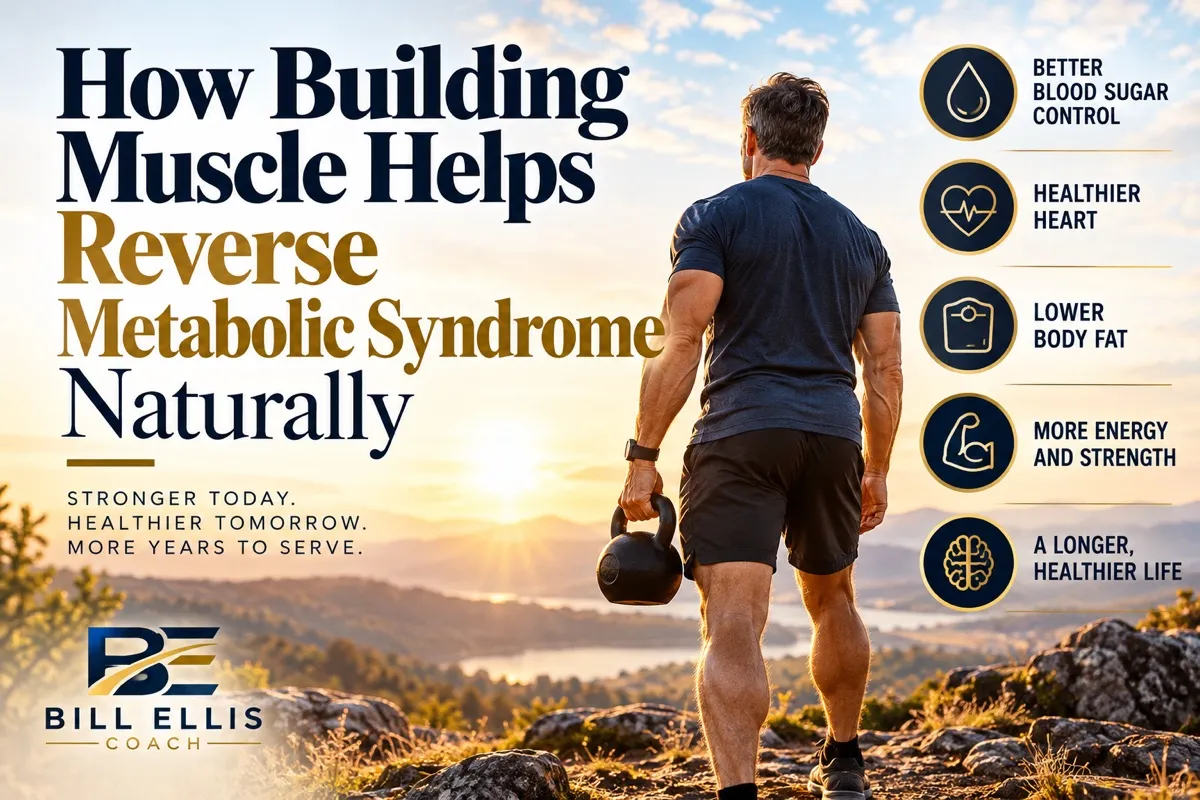
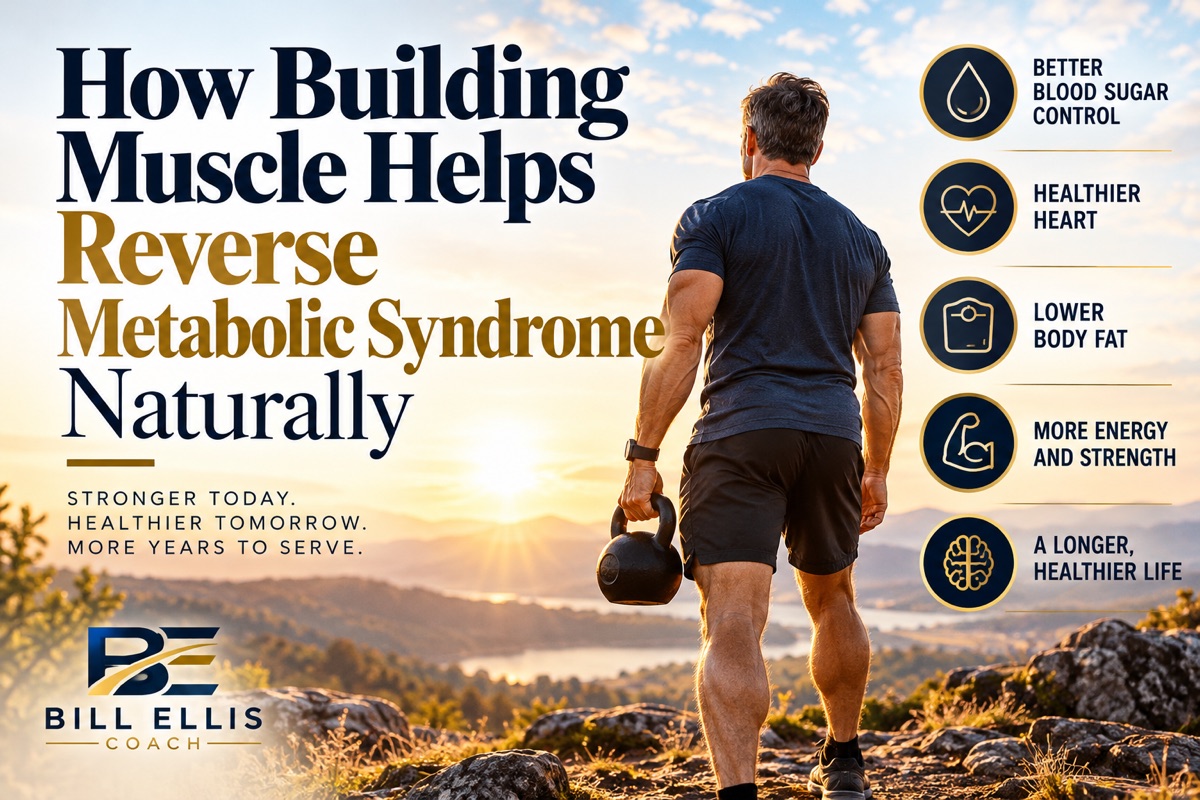
How Building Muscle Helps Reverse Metabolic Syndrome Naturally
If a doctor has ever said the words “metabolic syndrome” to you, it probably landed like a verdict. It isn’t one. It’s a warning light, and one of the most powerful things you can do about it is also one of the least glamorous: build muscle.
Let’s walk through what metabolic syndrome is, why muscle matters so much, what the research actually shows, and how to start this week.
What Metabolic Syndrome Actually Is
Metabolic syndrome isn’t one disease. It’s a cluster of markers that tend to travel together and raise your risk of type 2 diabetes and heart disease. Under the widely used 2009 consensus definition, you have it when three or more of these five are out of range:
A large waist (the cutoff varies by population; for U.S. men it’s about 40 inches or more, and for U.S. women about 35 inches or more)
Triglycerides of 150 mg/dL or higher
HDL (“good”) cholesterol below 40 mg/dL for men or 50 mg/dL for women
Blood pressure of 130/85 or higher
Fasting blood sugar of 100 mg/dL or higher
If you don’t know your five numbers, ask for them at your next visit. You can’t steward what you haven’t measured.
Muscle Is Your Blood Sugar Sponge
Most of us think of muscle as something you build to look strong. It’s also an organ that manages fuel. Skeletal muscle takes up the majority of the glucose your body clears from your blood after a meal. When you have more healthy muscle, you have more places for that sugar to go. When you have less, it lingers in the bloodstream and your body has to make more insulin to deal with it.
A large U.S. study of more than 13,000 adults found that people with more muscle relative to their body size had less insulin resistance and were less likely to have prediabetes. In that data, every 10% increase in relative muscle mass went along with about 11% lower insulin resistance and about 12% lower odds of prediabetes. That study looked at a snapshot in time, so it shows a strong link rather than proof of cause. But it fits what we know about how muscle handles sugar.
What Strength Training Actually Does
Here’s the part I want you to hear clearly, because I’d rather be accurate than flashy. A systematic review of 13 randomized trials in people with abnormal glucose metabolism found that resistance training:
Lowered HbA1c (your three-month blood sugar average) by about 0.5 percentage points
Reduced body fat by about 2.3 kg (roughly 5 pounds)
Lowered systolic blood pressure by about 6 points
It did not significantly change triglycerides or cholesterol in those trials. That’s worth knowing. Lifting helps with blood sugar, body fat and blood pressure. Triglycerides and HDL tend to respond more to what’s on your plate, how you sleep, and how much you move overall. So I won’t promise that muscle alone “reverses” metabolic syndrome. I will tell you it moves several of the markers in the right direction, and it works best alongside food, sleep and walking.
Why Muscle Quietly Disappears
Muscle mass and strength decline gradually as we age, and they decline faster when we’re inactive. Losing weight without strength training can strip away muscle along with fat. That’s one reason I keep saying that the number on the scale is the wrong scoreboard. You want to lose fat and keep, or build, muscle.
After losing almost 90 pounds, I started training with the X3 Bar and kettlebells. Sure, I like what building muscle has done for the man in the mirror, but the real victory is becoming the guy who looks at six bags of groceries and thinks, “One trip.”
That may sound like a joke, but that is exactly why muscle matters. Strength is not just about looking better. It is about making everyday life easier, staying capable as you get older, and being able to keep doing the things you want to do without needing someone else to do the heavy lifting.
How to Start This Week
The national Physical Activity Guidelines for Americans recommend muscle-strengthening activity on two or more days a week, working all the major muscle groups. That’s the bar. You don’t need a gym membership or a perfect program. Here’s a simple way to begin:
Two sessions a week, 20 to 30 minutes each. Full body, with a rest day in between.
Pick five or six basic moves: a sit-to-stand or squat, an incline or wall push-up, a row with a band or dumbbell, a hip hinge (like a deadlift or good morning), a step-up, and a farmer’s carry.
Two or three sets of 8 to 12 reps. Stop when you have a rep or two left, not when you’re shaking.
Add a little each week: one more rep, a little more weight, or a slower pace.
Eat protein at every meal. Muscle needs the raw material to rebuild.
One safety note. If you take medication for blood sugar or blood pressure, or you have any heart concerns, talk to your doctor before you start. Exercise can change how much medication you need.
A Biblical Perspective: Training With Purpose
Scripture doesn’t treat the body as an idol or as an afterthought. Paul writes, “Do you not know that your bodies are temples of the Holy Spirit, who is in you, whom you have received from God? You are not your own; you were bought at a price. Therefore honor God with your bodies” (1 Corinthians 6:19–20).
And he keeps it in proportion: “For physical training is of some value, but godliness has value for all things, holding promise for both the present life and the life to come” (1 Timothy 4:8). We don’t lift to be admired. We lift so we have the strength, energy and years to serve the people God has put in front of us.
Final Thoughts
Metabolic syndrome is a warning light, not a life sentence. Muscle is one of your best tools for answering it, and it’s available to almost anyone who is willing to start small and stay consistent.
So here’s my question for you: what’s the one strength move you can do twice this week?
Ready to turn this into a habit? The Temple Builders 28-Day Metabolic Reset gives you four weeks of simple daily habits, a Team Leader beside you, and a Day 0 and Day 28 assessment so you can see the change. Join the Reset, or start with the free Metabolic Age scan.
Sources
Alberti KGMM, et al. Harmonizing the metabolic syndrome: a joint interim statement. Circulation, 2009.
DeFronzo RA, Tripathy D. Skeletal muscle insulin resistance is the primary defect in type 2 diabetes. Diabetes Care, 2009.
Srikanthan P, Karlamangla AS. Relative muscle mass is inversely associated with insulin resistance and prediabetes. Journal of Clinical Endocrinology & Metabolism, 2011.
Strasser B, Siebert U, Schobersberger W. Resistance training in the treatment of the metabolic syndrome. Sports Medicine, 2010.
Physical Activity Guidelines for Americans, 2nd edition, U.S. Department of Health and Human Services, 2018.
Scripture quotations are from the NIV. This article is for education and is not medical advice. Talk with your doctor before changing your exercise or nutrition, especially if you take medication.
