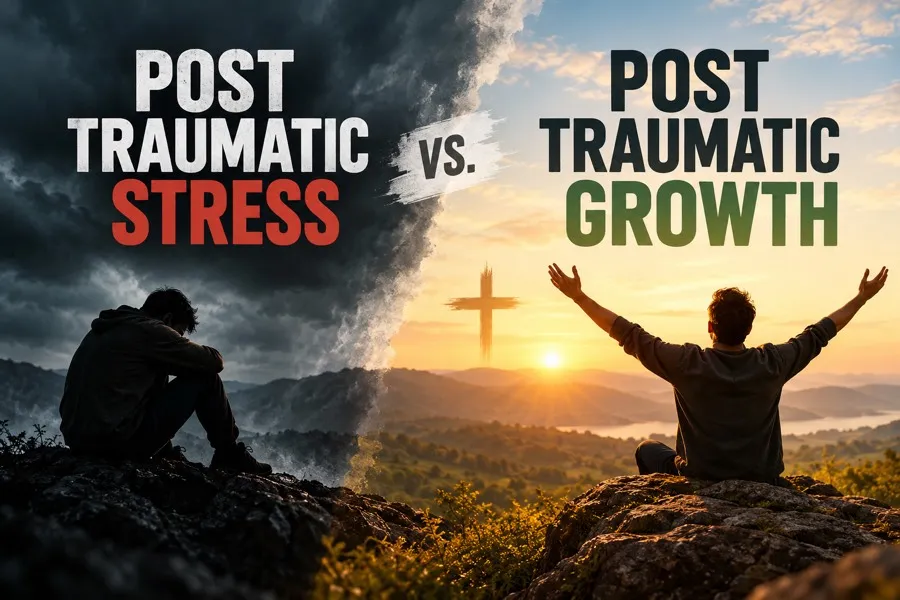
Wounded, But Growing
What happened to us can affect us deeply and still leave the last word to God.
The stories behind the medals
Every two years the Olympics remind me what moves the human heart. I tune in for the competition and find myself held by the stories. The broadcast pauses to tell us about a runner who rebuilt her life after a devastating injury. We learn about a swimmer who kept training through the loss of a parent. Suddenly the race carries more weight. The finish time matters less than the road that led to the starting line.
This past Sunday we saw that kind of story in person. We visited the Metro Region of the Chicago Church of Christ, where Ruben Narvaez shared his testimony. Eight years ago doctors found stage 4 kidney cancer and gave him no more than a month to live. He has been fighting it ever since. During those same years he lost his mother and his eldest granddaughter. He stood before us with his book, Walking on Water, and a faith that has been tested by all of it. Ruben’s life is a living example of the resilience this post is about.
I have been thinking about that pull during my Human Flourishing coaching certification. Researchers have a name for what we admire in those athletes. They call it post-traumatic growth. Scripture described it long before the term existed. Joseph’s story in Genesis may be the clearest portrait we have.
What researchers found
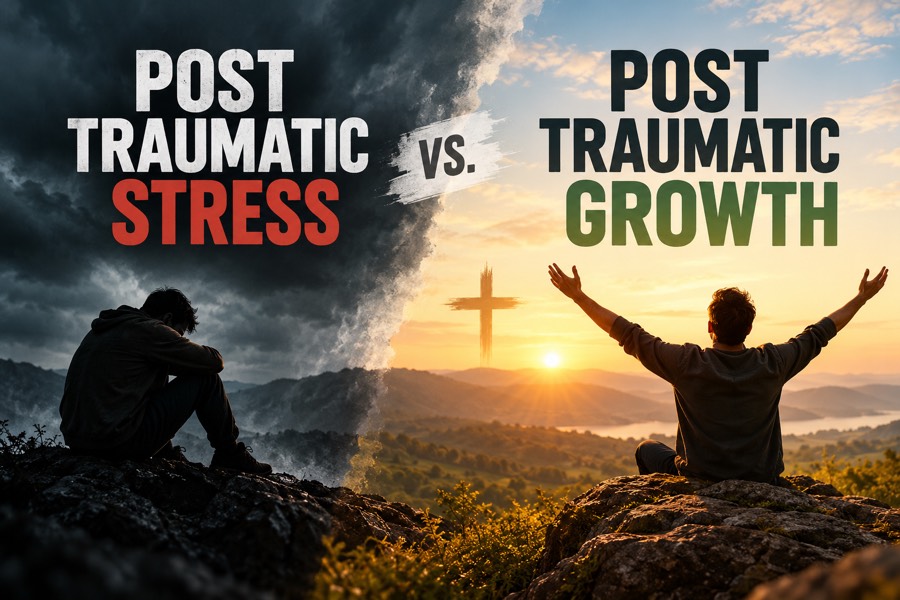
Post-traumatic growth is positive change that comes from the struggle with a major life crisis. Psychologists Richard Tedeschi and Lawrence Calhoun of the University of North Carolina at Charlotte coined the term in 1995 (interview with Dr. Tedeschi). Their research identified five areas where growth tends to appear. People report a greater appreciation for life, closer relationships, a stronger sense of personal strength, new possibilities, and spiritual change.
Three clarifications keep the idea honest. First, the growth comes from the struggle, and the trauma itself remains a real loss. Second, growth is a possibility. Many people carry post-traumatic stress for years, and symptoms such as intrusive memories, poor sleep, or constant alertness are no measure of anyone’s faith. Third, distress and growth can live in the same person at the same time.
I read that list of five areas and recognized it immediately. Scripture has been telling this story for a very long time.
Joseph tells the truth about the pit
Joseph’s story holds more trauma than most of us will ever face. His brothers betrayed him and threw him into a pit. He was sold into slavery and carried to a foreign country. Later he was falsely accused, imprisoned, and forgotten (Genesis 37; 39; 40).
Scripture lets that pain stand as pain. “The LORD is near to the brokenhearted and saves the crushed in spirit” (Psalm 34:18, ESV). The verse assumes that God’s people can be brokenhearted and crushed. It promises that God draws near to them in that very place.
Decades later Joseph’s brothers stand in front of him. By then he is powerful, married, and a father. His circumstances have changed completely. Even so, Genesis tells us again and again that Joseph wept (Genesis 42:24; 43:30; 45:2). The memory still reached him.
That detail encourages me. Healing in Scripture leaves room for tears. A healed person can remember what happened and still choose freely what to do next. Paul describes the same reality: “We are afflicted in every way, but not crushed; perplexed, but not driven to despair” (2 Corinthians 4:8, ESV). Paul admits the affliction. He also testifies that something greater holds him.
Evil named, and God still at work
After their father dies, the brothers fear that Joseph will finally take revenge. His answer is one of the great sentences in the Bible: “As for you, you meant evil against me, but God meant it for good, to bring it about that many people should be kept alive, as they are today” (Genesis 50:20, ESV).
Joseph calls the act what it was. He uses the word evil. He also sees that God was at work through every chapter of the story. Both statements stand together.
This guards us from shallow comfort. “Everything happens for a reason” can sound to a hurting person like an excuse for the harm. Joseph offers something sturdier. The harm was evil, it hurt him, and God was still working toward a good that evil could never stop.
Here the research and Scripture agree. Growth leaves the trauma exactly as serious as it was. What changes is who holds the future. Paul traces the path: “suffering produces endurance, and endurance produces character, and character produces hope” (Romans 5:3-4, ESV). Suffering is the setting. Formation is the fruit God brings from it.
From survivor to servant
Joseph’s view of his own story changed over time. In the pit, the story could only have been about what his brothers did to him. In Genesis 50, the story is about what God did through him. Many people were kept alive because Joseph was in Egypt. The past remained part of his story, and it no longer owned the story.
I think of this as the move from trauma-defined to purpose-directed. Paul describes the same movement. God “comforts us in all our affliction, so that we may be able to comfort those who are in any affliction” (2 Corinthians 1:4, ESV). Comfort received becomes comfort given. Your experience can give you eyes for hurting people that you lacked before.
Jesus gives us the deepest picture. After the resurrection He still carried His scars, and He showed them to Thomas (John 20:27). Resurrection kept the marks of the cross and gave them new meaning. God can do the same with ours. A scar can become a reminder of what you survived, what God taught you, and whom you can now help.
This may be why Olympic stories and testimonies like Ruben’s move us so much. We were made to recognize redemption when we see it.
What Ruben taught us on Sunday
Ruben’s sermon gave the research a face. I filled two pages of notes, and four of his points belong in this post.
Life is short, so gratitude comes first. Ruben took us to Psalm 90:10 and the brevity of our years. A man once given a month to live now treats every day as a birthday celebration. Researchers call that a greater appreciation for life.
Survival carries a purpose. He asked us why we are alive today. His answer came from Exodus 9:16: “But for this purpose I have raised you up, to show you my power, so that my name may be proclaimed in all the earth” (ESV). As he put it, we are saved from something and saved for something.
Suffering can teach, so write it down. Ruben opened Romans 5:3-4, the same passage this study leans on, along with James 1:2-4. His counsel was practical. Write what you learn in pain and suffering. Walking on Water shows that he has followed his own advice.
God’s love holds when medicine has no answer. When doctors offered no hope, Ruben held to Jeremiah 29:11 and its promise of a future. Speaking about grief, he said something I will carry for a long time. The absence of a loved one can be filled by God, and the absence of God cannot be filled by anyone. He pointed us to Romans 8:35-39, where nothing in all creation can separate us from the love of God.
Five questions for your own story
Bring one difficult experience to mind. You can work through these questions privately, in a journal, or with a trusted friend. If the memories feel overwhelming, a licensed counselor is a wise companion for this work.
What happened to me? Tell the truth at its full size.
How did it affect me? Name the wounds, fears, habits, and protective behaviors that followed.
What have I learned? Look for wisdom and keep the memory honest.
Who am I becoming? Consider your character, faith, relationships, priorities, and compassion.
How could God use this? Let the answer move you from survival toward purpose.
Who are you becoming?
Joseph remembered the pit, the slavery, the injustice, and the lost years. He gave authority over his future to God alone.
That gives us a working definition. Post-traumatic growth is the discovery that, with God, the wound has a place in my story while God decides who I become.
Going back to who we were before is often impossible. The Christian hope is better. God can form something new in us: deeper faith, stronger character, and a life able to help others.
Many of us have asked, “Why did this happen to me?” That is an honest question. Try adding a second one this week: “God, who are You forming me to become through what I have survived?”
A prayer
Father, give us courage to tell the truth about what has hurt us. Help us see our wounds at their true size and find our identity in You. Bring healing where we hurt, wisdom from what we have endured, and purpose from what we have learned. Use even the hard chapters of our stories to shape us into the image of Christ and to make us a source of comfort to others. Amen.
Sources
The Many Layers of Post-Traumatic Growth, an interview with Dr. Richard Tedeschi, BrainLine. Scripture quotations are from the ESV.
